Thursday, October 17, 2013

Post It. Pop it.


I suppose I was a bit inspired by Professor Echeverry's Modern Saints portraits from his website when doing my grid art project. (http://www.echeverry.tv/?f=photos&b=saints) I decided the best way to effectively translate an image from its original form into a grid was to project the image and build the project on top of it.

I decided the coolest way to do this (in keeping with the theme of my pop blog) was to use Post It Notes. I snuck into Plant Hall for a 3 hour night marathon of sticking post its to a projector screen. It ended up a lot bigger than the minimum requirement. Things I learned:

1) Post Its do not stick to screens. I had to use a small piece of scotch tape to get them to temportarily stay.

2) Do not assume a room will be free for the rest of the night when two professors tell you it is. A club meeting interrupted me an hour in. I had to wait outside and finish later

3) All projectors in Plant Hall automatically turn off at 10:20. I learned this the hard way and had to finish up without it. At least there wasn't much left.

4) Plant Hall is definitely haunted. I seriously can not explain the things I experienced that night.

I recreated what the projected image looked like on top of the Post Its...


The finished product without the projection...


Hundreds of Post It Notes and the aftermath... That wasn't even my Dairy Queen. :(


I'm really happy with the way it turned out!
-Michael
Thursday, October 10, 2013

"Sometimes life hits you in the head with a brick. Don't lose faith."

I've actually watched Steve Jobs' 2005 Stanford Commencement Speech several times over the course of the last few years. It seems to be becoming a standard part of curriculum in many courses. I watched it again for Art and Tech and the same quote always resonates with me.

"I'm convinced that the only thing that kept me going was that I loved what I did. You've got to find what you love. And that is as true for your work as it is for your lovers. Your work is going to fill a large part of your life, and the only way to be truly satisfied is to do what you believe is great work. And the only way to do great work is to love what you do. If you haven't found it yet, keep looking. Don't settle."


Jobs' story about the development of typography on the Mac and how beautiful computer typography all stemmed from the calligraphy course he took when he dropped out of Reed is amazing. I'm sure we would eventually have come to the same conclusion but without Job's desire to follow what he loved it would have taken a lot longer.


Jobs sums it all up with this quote: "You can't connect the dots looking forward; you can only connect them looking backwards. So you have to trust that the dots will somehow connect in your future. You have to trust in something — your gut, destiny, life, karma, whatever. This approach has never let me down, and it has made all the difference in my life."

-Michael

Monday, October 7, 2013

Remix Culture

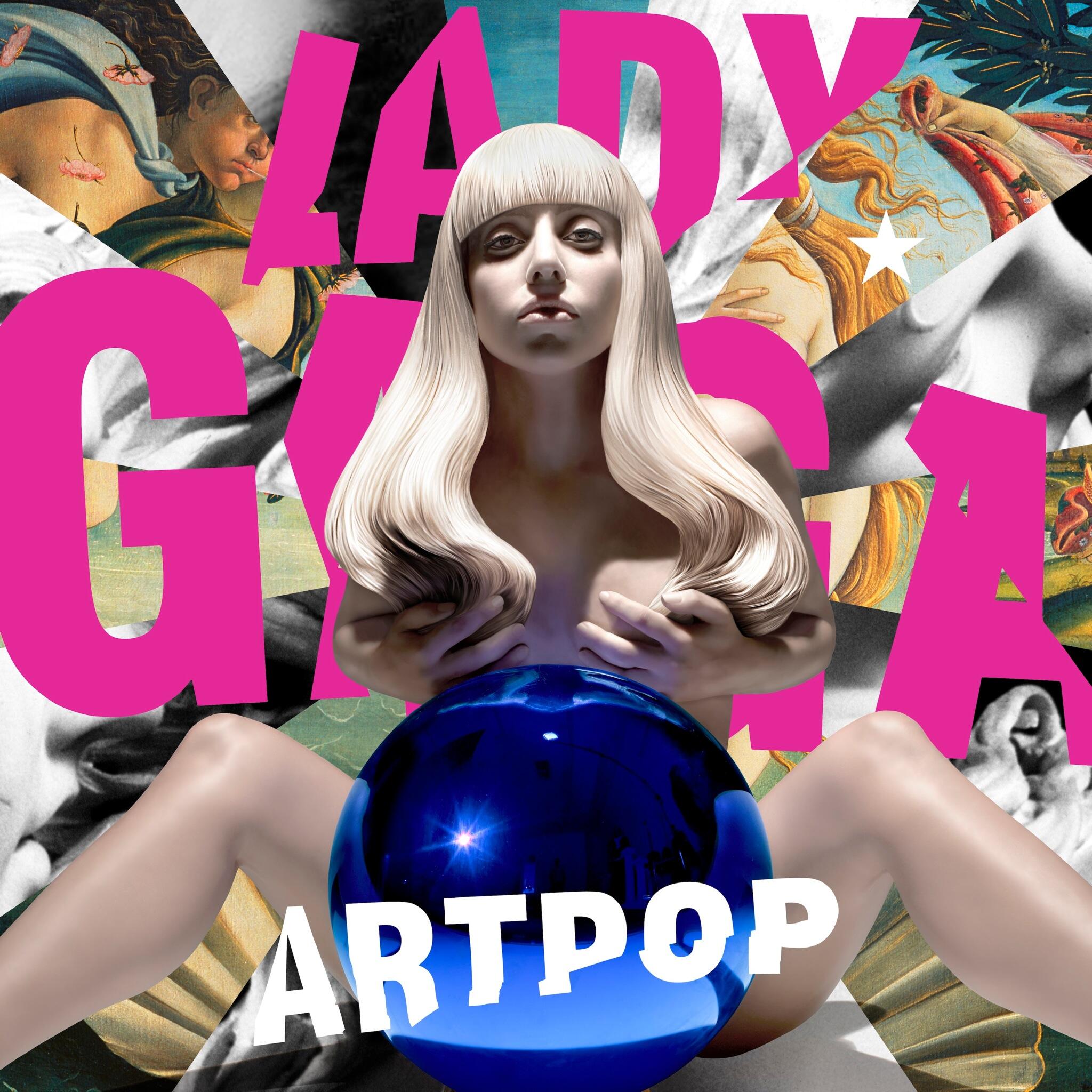
We've been talking a lot about remix culture in class and I think Gaga's ARTPOP cover released today serves as a great example.


There are several inspirations present on the cover and more not yet discovered-

1) Jeff Koons' gazing ball... (Gaga on the cover is actually a Koons sculpture)


2) "The Birth of Venus" by Botticelli...


 3) "Apollo and Daphne" by Bernini...


And just for fun here are a couple recent performances inspired by imagery also present on the cover...

Seashell girl at the iTunes Festival in London-


Koons Gazing ball at 1:40 on the 2013 VMA performance-


Hopefully this was pertinent to the class. Thanks for reading.

-Michael


Alan Turing and the Bombe

Alan Turing's computer related studies can be traced back to the summer of 1938 when he worked on a machine capable of breaking the German "Enigma code." The machine was preceded by a machine called "bomba," named after Polish ice cream. The frozen treat was replaced by Turing's invention, the "bombe," which was completely different and much more useful than it's predecessor. By the end of the war, the bombe was decoding between 39,000-84,000 messages per month. For his amazing contributions to the war effort, Turing was made an officer of the Order of the British Empire.


Following his work in the war, Turing went on to work for the National Physical Laboratory. At the NPL he developed a "general purpose" computer with advanced storage capabilities. His colleagues decided that engineering the project would be too difficult so a simplified version was built. If Turing's version had been made it would have been the most advanced computer of the day.


Turing was accused of being gay by the British government and sentenced to hormone therapy. His government clearance was also revoked. He wrote on Artificial Intellegance before commiting suicide in 1954.


Polish ice cream.

Thursday, October 3, 2013

War of the Worlds Panic

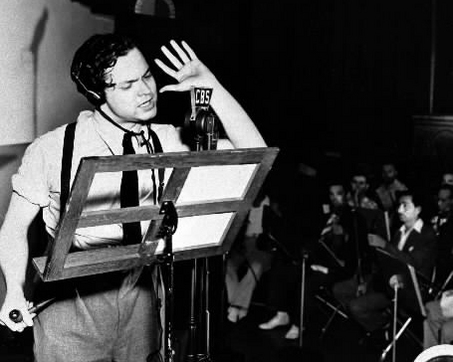
After listening to the War of the Worlds broadcast from 1938 I can definitely see how people were convinced the martian invasion was real. If it was adapted for radio today I think it might even cause a similar disturbance. People are gullible and with the format it was presented in- it all makes sense.


The format of the broadcast was intentional to make headlines and cause panic. The way the music is cut in and out and the weather bulletin is given makes it seem like it's really happening. It goes beyond just immersing the audience in the story. I believe the broadcasters knew the implications of what they were doing which is why the disclaimer is present at the end. If they didn't foresee panic happening there would have been no reason for them to include it.

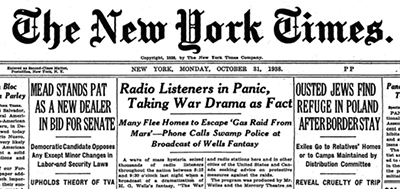
Welles and CBS definitely got the press they wanted the next day.


Full broadcast here:


Wednesday, October 2, 2013

Development of the Modern Battery

I found this clip explaining a theory on Egyptian batteries and the possibility that they powered light bulbs. Ignore the alien stuff at the end because I really don't think it's relevant to the main idea. Very interesting stuff!


The accepted battery timeline shows Voltaic pile as the first battery able to provide a current to a circuit continuously. It looked something like this...


This was followed by the Daniell Cell, which improved upon the Voltaic pile by using different metals.

Bunsen created the first liquid battery in 1842.


Leclanche created the first dry cell and therefore portable battery in 1866...


Carl Gassner invented the first first commercial battery in 1881 and the rest is history...


Tuesday, October 1, 2013

So...

...I watched Tommy and as far as cult classics go I thought it was great. The film relied heavily on symbols and I think it really worked. It's an art film and should be viewed as such.

A few comments/observations...

1) Where do I submit my application for The Church of Marilyn?
2) I think Tina is going to haunt my dreams.


3) Acid Queen is one of the grooviest things I've seen in a while. I love it.
4) The religious/cult themed scenes going on were absolutely amazing. Very very interesting.
5) I have a strange craving for baked beans.
6) But not this much...